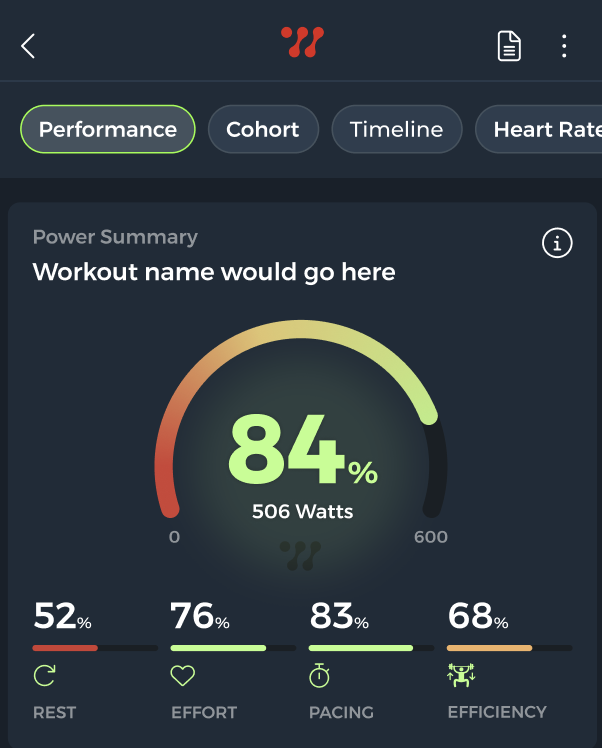
- Your body is an engine, and we measure how much power it generates to understand your work capacity across broad time and modal domains.
- For information on the science behind power, please see (link) — in simple terms, more power is better for both wellness and performance.
- For each WOD, you can compare your power score against:
Your Best Self: The highest possible score if you maintained peak efficiency throughout the workout—an inspiring benchmark.
Your Cohort: The performance of others who completed the same WOD.
- We then break it down to show what contributes to your power production:
There are four factors that contribute to your power score. They are:
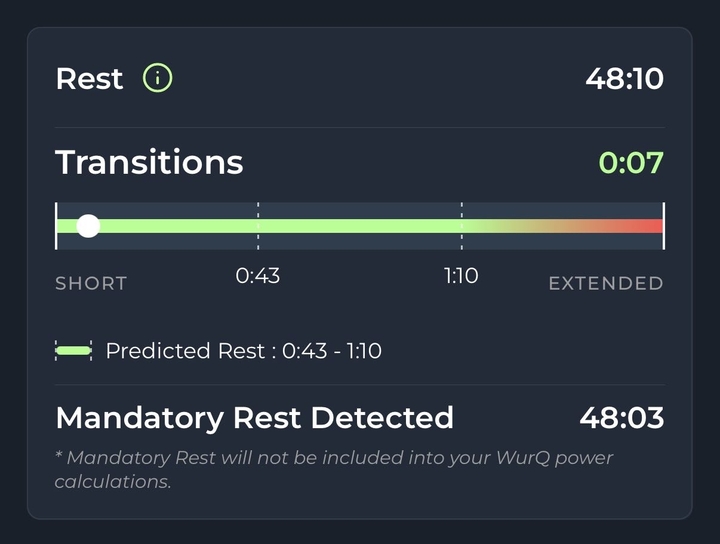
Rest - Shows how well your rest matched the predicted rest for the workout. Excludes mandatory rest periods.
Effort - Shows how steady your heart rate was during the workout. Consistent heart rate = better effort score
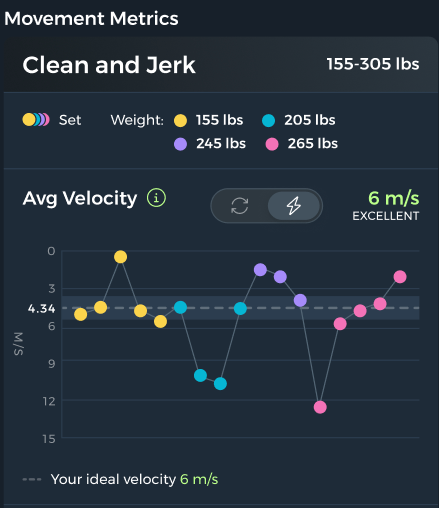
Pacing - Shows how consistent your movement speed was across sets or rounds
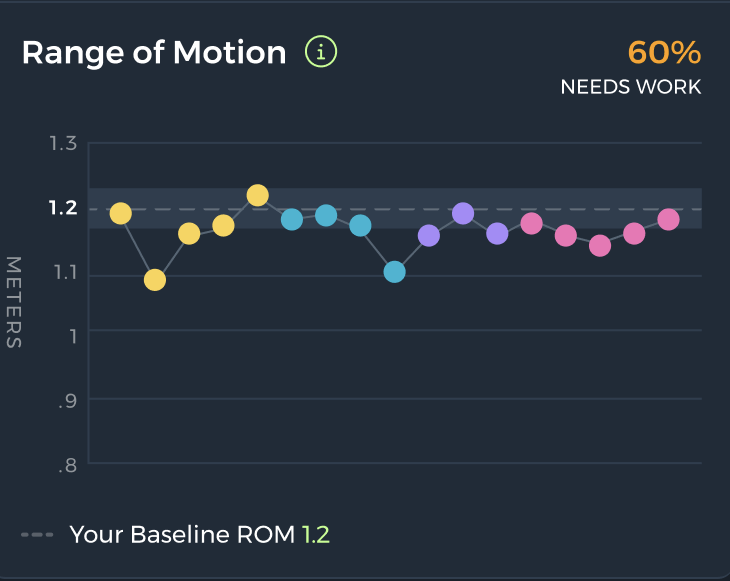
Efficiency - Shows how closely your movement matched your full range of motion. Shorter or inconsistent range of motion can lower this score.
Rest time in transitions and breaks. We incorporate a lot of factors to suggest how much rest your body needed during your workout. You can then compare the suggested amount to the actual amount of time that you rested. Factors include: workout type, exercise, number of reps, weight used, age, and body weight.
Rep cycle for each movement. This value shows how many seconds it takes on average to move from rep to rep across rounds. For better efficiency, aim to keep this line steady throughout your workout.
Range of motion—if your range of motion reduces due to fatigue or imperfect technique, this will result in less work completed, and therefore less power. You can assess your range of motion round by round.
Effort (Heart Rate)—Shows how steady your heart rate was during the workout. Big spikes, sudden drops, or repeated ups and downs can lower this score.
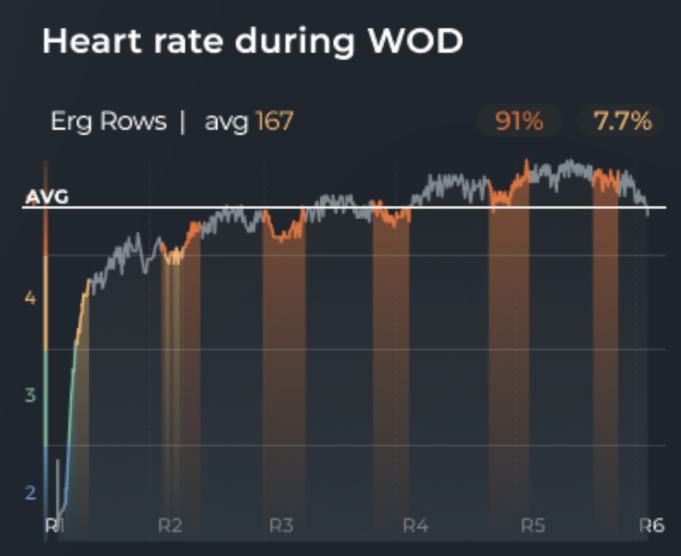
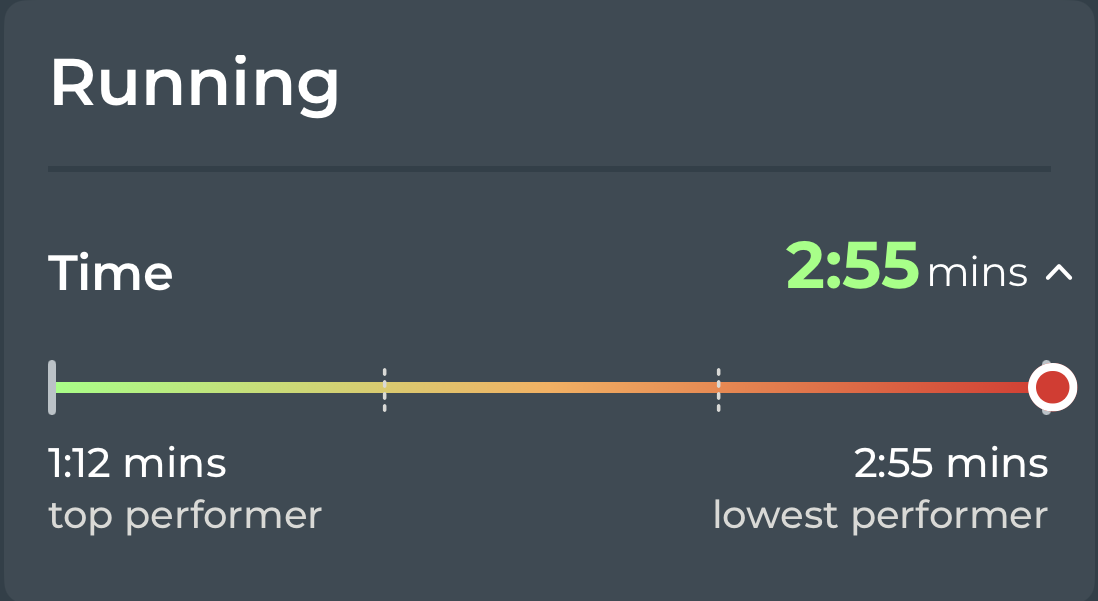
For cardio movements like running, rope jump, rowing, etc., we use MET estimates to calculate work and power..
For more details on how we measure WurQ Power- check this link
Was this article helpful?
That’s Great!
Thank you for your feedback
Sorry! We couldn't be helpful
Thank you for your feedback
Feedback sent
We appreciate your effort and will try to fix the article